

A well-protected portfolio is not the one with the most investments. It is one built to withstand risk, meet liquidity needs, and limit damaging concentrations. Effective high net worth portfolio protection means aligning those priorities with your time horizon and financial commitments.
Wealth can be spread across asset classes and still carry hidden risks. A large holding in one company, limited access to cash, or exposure to a sharp market decline can undermine an otherwise diversified plan. Protection starts with understanding how these risks interact.
This guide explains how to assess portfolio risk, diversify across public and private investments, plan for liquidity and income, and review holdings as conditions change. It also covers ways to reduce concentrated stock exposure and how market drawdown signals can inform a disciplined, long-term approach. The aim is clarity: understand what your portfolio needs to withstand and where closer attention may matter most.
Key Takeaways
- Stress-test your portfolio against downturns and consider how concentration, leverage, and liquidity events could affect your long-term plan.
- Assess how public and private investments, including domestic and international exposure, contribute to diversification and overall risk.
- Match accessible assets and income sources to your spending needs so market volatility doesn’t force poorly timed decisions.
- Use regular portfolio reviews to identify changes in risk, allocation, and liquidity needs before they disrupt your strategy.
- Evaluate concentrated stock exposure and consider how a measured reduction could affect diversification, taxes, and your investment objectives.
Personalized risk assessment and risk management
Personalized risk management links portfolio decisions to your goals, obligations, and tolerance for losses. It helps reveal how market declines, concentrated holdings, taxes, and family plans can interact.
Assessing Individual Portfolio Risks
A personalized risk assessment maps financial exposures against your goals and capacity to absorb losses. This matters because two portfolios with similar assets can face different pressures. A business owner nearing a sale, for example, may need liquidity and protection from correlated holdings. A retiree drawing income may prioritize limiting the effect of a downturn on planned withdrawals.
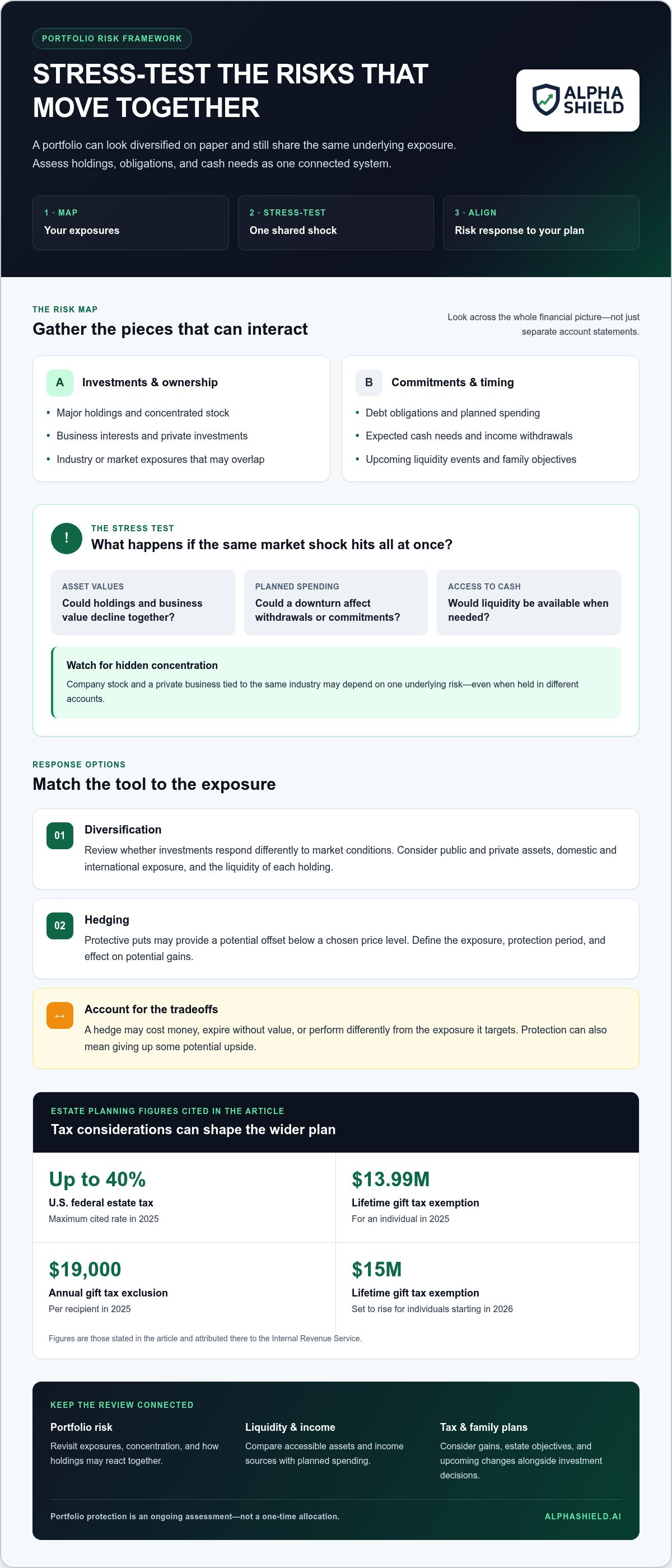
Examine exposures together, not as separate account statements. List major holdings, business interests, debt obligations, expected cash needs, and upcoming liquidity events. Then consider how each might respond to the same market shock. If company stock and private business value depend on one industry, diversification across account labels may not reduce the underlying concentration.
Stress-testing helps make those connections visible. Consider how a market downturn could affect asset values, planned spending, and access to cash at the same time. Wealth management should also account for family objectives and estate transfer. The U.S. federal estate tax can be as high as 40% in 2025, according to the Internal Revenue Service. The U.S. lifetime gift tax exemption for an individual is $13.99 million in 2025, according to the Internal Revenue Service. The U.S. annual gift tax exclusion is $19,000 per recipient in 2025, according to the Internal Revenue Service. The U.S. lifetime gift tax exemption is set to rise to $15 million for individuals starting in 2026, according to the Internal Revenue Service.
Capital gains distributions also deserve attention. Review which holdings may generate realized gains and how a sale could affect the broader plan. Separately managed accounts can support tax-loss harvesting, where eligible losses may offset gains under applicable tax rules. A wealth manager can coordinate portfolio risk, liquidity needs, and tax planning, while an attorney or CPA addresses legal and tax considerations. The goal is to preserve flexibility, not to make tax decisions in isolation.
Options and Hedging for Market Downturns
Options and hedging strategies can reduce exposure to a defined market decline by creating positions that may gain value as targeted holdings fall. Protective puts, for example, can provide a potential offset below a chosen price level. The protection depends on the assets covered, timing, and position structure. Hedging may be relevant when diversification alone does not address a portfolio risk.
Hedging Risks and Tradeoffs
Hedging and portfolio insurance trade some potential cost or upside for a measure of downside protection. An option may expire without value if the expected decline does not occur within its term. A hedge can also perform differently from the portfolio exposure it targets. Before using one, identify the risk being reduced, the protection period, and the effect on gains. Precision matters more than complexity.
Portfolio diversification across public and private investments
Strategic diversification spreads exposure across investments that respond differently to market conditions. The right mix depends on your goals, liquidity needs, and ability to tolerate risk.
Strategic Asset Allocation and Diversification
Strategic asset allocation assigns target roles to different asset classes, while diversification limits reliance on any single exposure. Together, these strategies help manage risk across a complex portfolio. Public equities, fixed income, and cash can sit alongside private equity, private credit, infrastructure, co-investments, and private real estate. Consider domestic and international exposure, too. The purpose is to balance return objectives with liquidity and resilience, not to collect assets indiscriminately.
Review each investment for the risk it adds, not just its label. Two funds may hold different securities but still respond similarly to the same economic shock. Private investments may broaden exposure, but their liquidity and valuation processes differ from those of publicly traded holdings. An advisor can map these characteristics against your time horizon and spending plans. If an allocation depends heavily on one market, sector, or investment structure, rebalance the overall mix rather than adding another similar holding.
Portfolio insurance strategies can include protective options or other hedges designed around specific exposures. Their costs vary with the instrument, coverage period, portfolio exposure, and market conditions. Premiums, financing, and forgone gains can all matter. No single approach has one fixed cost or suits every allocation.
Diversifying Low-Basis Stock Positions
A low-basis stock position has a purchase cost well below its current value, which can make diversification decisions tax-sensitive. Selling shares may realize gains, while retaining the entire position leaves wealth tied to one company. Before choosing a reduction strategy, identify the holding’s role, the concentration it creates, and your liquidity needs.
Possible approaches include selling in stages, donating eligible shares, or using a separately managed account to coordinate holdings and tax-loss harvesting. Each option has different tax and control implications. A CPA or attorney can assess the relevant circumstances alongside an advisor. The objective is to reduce single-company exposure in a way that fits the broader investment plan, rather than making a large sale without considering the consequences.
Trusts and LLCs can organize ownership, control, and transfer of investment assets. Their effect on creditor exposure depends on the structure, governing jurisdiction, and applicable law, so entity ownership alone should not be treated as automatic protection. Distinguish legal ownership arrangements from investment diversification. A trust may support transfer planning, while an LLC may define how certain assets are held. Neither changes the market risk of the underlying investments.
Inflation, interest-rate, and currency risks call for different exposures. Inflation can erode purchasing power, so investors may assess assets with returns tied to changing prices. Interest-rate shifts can affect bonds and borrowing costs, while international holdings introduce currency movements. Domestic and international investments, varied maturities, and asset classes with different economic drivers can spread these exposures. The allocation should reflect spending currency, liabilities, and when the funds will be needed.
Liquidity and income needs
Liquidity planning connects accessible assets with spending, obligations, and investment timelines. A portfolio can hold substantial wealth yet lack funds for a near-term need. Match each expense to an appropriate source of cash to reduce pressure to sell long-term investments during an unfavorable market period.
Begin with a cash-flow map. Separate recurring needs, planned large purchases, taxes, debt payments, and unexpected obligations. A property purchase or business transition, for example, can create a cash need distinct from regular household income. Identify which assets can meet each obligation and when the funds must be available. This turns liquidity into a defined portfolio requirement.
In the United States, high-net-worth individuals are generally described as having more than $1 million in highly liquid assets. That threshold is a broad description, not a personal spending target. The amount of accessible wealth needed depends on obligations, income sources, and the timing of future expenses. A household with variable business income faces different cash-flow demands from one receiving predictable distributions.
Public equities, fixed income, and cash can serve complementary roles. Cash can cover immediate spending, while fixed income can support planned income needs. Public equities provide market exposure but can fluctuate in value. Assigning each asset a clear purpose helps prevent one holding from carrying incompatible demands, such as funding near-term expenses while supporting long-term growth.
A fixed-income ladder can organize income across staggered maturities. As one holding matures, its proceeds can meet a planned expense or be reinvested, depending on cash-flow needs. This structure can make future income easier to coordinate. Review the ladder alongside debt payments, tax obligations, and anticipated estate costs, rather than assessing its income in isolation.
Withdrawal decisions also affect portfolio returns. If markets fall while spending continues, selling depressed investments can reduce the assets available for a recovery. A planned liquidity reserve and clear withdrawal order can help separate spending needs from longer-term holdings. For example, use scheduled income and available cash before deciding whether to sell equities or other growth assets.
Liquidity planning must include transfers, too. Estate distributions, charitable commitments, or a business sale can create timing and cash-flow demands for several people. Coordinate expected transfers with account ownership, income sources, and upcoming obligations. A written cash-flow schedule helps family members understand which assets are intended for spending, investment, or transfer, and when each purpose takes priority.
Portfolio monitoring and ongoing reviews
Review a high-net-worth portfolio quarterly, and document any changes in risk, allocation, and liquidity. A scheduled review provides a consistent point for comparing current holdings with the investment plan. Detailed reporting should show performance, asset mix, fees, cash flows, and material exposures. For example, a report can reveal that one holding has grown enough to alter the portfolio’s risk profile, even without a new purchase.
Start each review by comparing actual allocations with the portfolio’s targets. Identify holdings that have moved away from their intended roles, then assess whether rebalancing supports your objectives. Market movements can change exposure without deliberate trading. If public equities rise faster than fixed income, the portfolio may carry more market risk than planned. Record the reason for any adjustment, or for leaving the allocation unchanged.
Next, examine how circumstances have changed since the previous quarterly review. A business sale, inheritance, major purchase, or family transfer can alter liquidity needs and investment timelines. Update the cash-flow plan when an event changes expected income or obligations. A planned property purchase, for instance, may change the role of cash and short-term holdings. Monitoring should connect portfolio decisions to real commitments, not just market prices.
Include tax planning in the same review. Check realized gains, potential losses, and expected distributions before making portfolio changes. If a holding has appreciated, compare the consequences of selling now with the risks of retaining it. Coordinate with a CPA on tax considerations and an attorney on legal matters. This helps align investment decisions with the broader plan without making tax outcomes the only objective.
Estate planning and charitable intentions can also change how assets are held or transferred. Review beneficiary designations, trust-held investments, and planned charitable contributions when family circumstances or objectives shift. A donor-advised fund or private foundation may involve different giving and governance plans. Record which assets support family wealth, which are intended for charitable use, and who needs clear reporting about each purpose.
Use each quarterly review to create a short action record. Note the decision, the portfolio exposure it addresses, and the next review point. Separate required actions from items to monitor, such as a concentrated position or an upcoming liquidity event. Detailed reporting gives the investor and relevant professionals a shared record. This discipline makes oversight more systematic and links changing conditions to specific decisions.
Reducing concentrated stock risk
A concentrated stock position ties a large share of wealth to one company. Its price can influence portfolio value, liquidity, and future plans at once. For a founder holding company shares, the same business may shape both investment assets and employment income. Reducing that overlap can make the portfolio less dependent on one outcome.
Start by mapping direct and indirect exposure. Include individual shares, employer stock, company options, and funds with substantial holdings in the same business or sector. Then consider how those exposures might respond to one event, such as weaker sales or a leadership change. A portfolio can appear diversified by account while still depending heavily on one company’s performance.
Next, define the position’s role and a practical reduction objective. Decide, for example, whether the shares are intended to fund spending, support a charitable gift, or remain invested for another generation. That purpose helps frame the pace and method of change. Compare gradual sales with retaining shares, taking liquidity needs and the portfolio’s wider allocation into account.
Low-basis shares add tax considerations. Selling can realize gains, so coordinate the timing and amount with a tax professional. An investor might evaluate staged sales rather than making one large disposition. Eligible shares may also be considered for charitable giving, while a separately managed account may support tax-loss harvesting elsewhere in a portfolio. Each approach has distinct effects, so assess it within the full plan.
Hedging can address some downside exposure without immediately selling the underlying shares. Depending on their structure, options may provide defined protection for a period or below a chosen price. But a hedge does not remove company-specific risk or guarantee an offset. Its duration, coverage, cost, and potential effect on gains matter. Compare those tradeoffs with a gradual reduction strategy.
Ownership structures can support transfer planning, but they do not diversify the stock itself. A trust may help organize how shares pass to beneficiaries; an LLC may define ownership arrangements for certain assets. Coordinate these decisions with an attorney and tax professional. Review the plan when a business sale, inheritance, or family transfer changes the position’s purpose or the household’s exposure.
Make the process efficient with a written review: record the company exposure, intended role, reduction options, tax questions, and next decision point. Revisit those items when income, liquidity needs, or family objectives change. This record can help support wealth preservation across generations without relying on one stock’s continued performance.
Alpha Shield: Alpha Shield Market Signal
Alpha Shield Market Signal provides a daily IN or OUT indicator to help investors navigate market volatility and manage drawdown risk. It can add a systematic, market-focused input to your portfolio review, but it does not replace diversification, liquidity planning, or individualized investment decisions.
The Market crash and drawdown tool and Alpha Shield Dashboard present indicators for market risk management. Investors can use that information as part of a disciplined review, rather than reacting to every market move. The focus is long-term capital preservation, not day-trading tools, shorting strategies, or individual stock recommendations.
If market volatility is part of your portfolio review, visit alphashield.ai to learn more.
Make your protection plan actionable
Lasting wealth depends not only on portfolio design, but also on how decisions are made as circumstances change. Turn your priorities into a clear decision framework: define which risks require action, who participates in major decisions, and how changes will be recorded. That structure helps keep high net worth portfolio protection aligned with your goals rather than short-term market noise.
Choose a practical next step. Document the questions your current plan still leaves open, such as how much market exposure fits your objectives or what conditions would prompt a review. A focused discussion can help clarify where a market signal belongs within your broader investment process.
Build your plan with discipline, review it as your needs evolve, and let clarity guide your next decision.
Frequently Asked Questions
What does portfolio protection mean for high-net-worth investors?
Portfolio protection means managing avoidable risks while keeping investments aligned with financial goals. It does not remove market risk or guarantee a particular outcome. For high net worth portfolio protection, assess household assets and obligations together. These can include investments, business interests, debt, spending commitments, and planned transfers. This broader view can reveal reliance on one source of value or income, even when separate investment accounts appear diversified.
How should high-net-worth investors diversify portfolios across asset classes?
Diversify by the economic risks investments carry, not only by their names or account types. Several funds, for example, may all depend on growth in the same sector. Consider how each holding contributes to income, growth, liquidity, or inflation sensitivity. Direct new contributions or distributions toward underrepresented roles when that fits the plan. This can gradually adjust exposure without treating every market movement as a reason to trade.
How can Treasury bonds, cash, and other safe assets reduce portfolio risk?
Treasury bonds and cash can provide liquidity and help meet spending needs without relying solely on stock sales. Their risks differ: bond prices can fluctuate when interest rates change, while cash can lose purchasing power as prices rise. A short-term expense may suit readily accessible cash; money intended for later needs may have a different role. Match each holding to its purpose and expected time of use.
What are the tax implications of portfolio protection strategies in the United States?
Portfolio changes can affect taxable income when they generate realized gains, interest, dividends, or distributions. Before selling, review the specific tax lots, including their cost basis and holding period, with a tax professional. Account type and strategy can also affect tax treatment. Keep transaction records and coordinate investment changes with tax planning, especially when a sale, gift, or charitable transfer is part of the decision.
How can investors assess portfolio risk and set appropriate rebalancing rules?
Assess risk by comparing intended exposure with actual holdings, then consider how the portfolio might respond to a market decline or income disruption. An effective high net worth portfolio protection process sets rebalancing rules in advance. Define which changes prompt action, who approves it, and how taxes and trading costs enter the decision. Use scheduled reviews and meaningful life events, such as a business sale, to reassess and limit reactive choices.
How do trusts, LLCs, and asset-protection laws protect investment assets?
Trusts and LLCs can organize ownership, control, and transfer of assets, but they do not automatically protect assets from creditors. Creditor exposure depends on the structure, governing jurisdiction, and applicable law. These arrangements do not change the investments’ market risk.


